<img height="1" width="1" style="display:none" src="https://www.facebook.com/tr?id=656789255406301&amp;ev=PageView&amp;noscript=1">

What happens when patient's stop hearing from you

A single, well-timed text message can change everything.

It can prevent a patient from missing an appointment. It can stop an unnecessary call to a booking line. And, when used at scale, it can free up millions of pounds in wasted time and resources across the NHS.

Long waits on booking lines and hospital switchboards. High call abandonment rates. Patients making repeat calls because they’ve had no update on their care. And millions of missed appointments each year because patients lack visibility over what’s happening and can’t easily confirm, rebook, or cancel.

In 2022 alone, the NHS saw 8.4 million missed outpatient appointments. That’s a loss of over £250 million in wasted clinical time - time that could have been spent on patients in need. At the same time, an average NHS Trust takes around 3,400 calls every day, many of them chasing appointments or test results.

Without better communication, the problem compounds: longer queues, higher abandonment rates, lower satisfaction, and more wasted resources.


When policing faced the same problem

Similar issues were faced by policing teams - but instead of hiring more staff, they decided to invest in technology.


“We knew that if we wanted to keep delivering a great service and reduce call wait times, we’d need to handle thousands more updates every week. Doing that with our existing systems would have meant hiring 31 full-time staff at a cost of £1.4 million a year. Instead, we invested in a secure digital portal with proactive SMS and email updates. People could log in, see real-time information, and get notified the moment something changed - without picking up the phone. It gave people the answers they needed instantly and freed our team to focus on the work that really mattered.” – Superintendent Rob Brind


 

When Thames Valley Police and Hampshire and Isle of Wight Constabulary faced the same challenge, they built a secure digital communication system on Salesforce that allowed the public to:

  • Receive instant SMS or email alerts when there was an update
  • Log in anytime to check progress and track updates - promoting self-service 
  • Send queries directly through the portal instead of calling, and an officer handling their case would get back to them  
 

And working together with us, they did it in weeks not years:

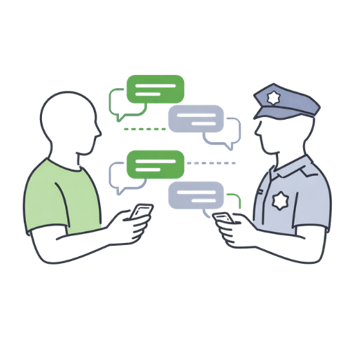
Two-way messaging_image


  • Victim portal - Live in 15 weeks; streamlined updates for thousands with no extra staff

  • Two-way messaging - Built in 8 weeks; enabled real-time conversations, cutting repeat calls


A fast ROI. The solution paid for itself in less than a year. Every year since, it has saved policing teams £1.4 million in headcount costs and reduced inbound update calls by 163,000 annually.

The same approach, built for patient care.

Using our same approach, ICBs, or regional healthcare trusts within the NHS could create a portal to suit their needs to enable them to:


Healthcare icon_8
Give patients a single login to see all appointments, referrals, and test results in one place
Healthcare Icon_4
Send automatic SMS/email reminders to reduce DNAs - saving £30 for every missed GP appointment and up to £160 for every specialist outpatient slot avoided.
Healthcare icon_6
Provide instant updates when an appointment changes or results are ready - cutting thousands of “just checking” calls.
Healthcare icons_11
Move a significant percentage of inbound calls to online self-service - saving £67.90 per contact compared to a phone-based 111 interaction.
Healthcare icons_20
Free up call handlers to focus on urgent cases and patients with complex needs
Healthcare icons_21
Let patients confirm, cancel, or reschedule directly through the portal, turning a potential missed appointment into a manageable, digital conversation.

DISCOVER OUR NHS SOLUTIONS


What the data actually shows

In policing, the introduction of SMS and portal access increased engagement per user from 4 to 7 visits in a year and raised satisfaction scores by 15%.

Simple, low-cost changes can have a huge impact. A London NHS trial showed that adding the cost of a missed appointment to SMS reminders cut non-attendance rates by up to 26%, saving a typical trust around 5,800 appointments a year - without a joined up approach to other areas. Now is the time to put proven ideas like this into practice.

And these are just two examples of what proactive communication can deliver. See the full picture of what policing forces achieved and what it means for the NHS.


One process. A few weeks. Lasting results.

The police didn’t try to solve every challenge at once – they chose one priority process and delivered it in weeks. The NHS could do the same, starting with updates to outpatient appointments or test result notifications.

In just a few weeks, a solution could be live and already reducing calls, cutting DNAs, and improving patient satisfaction. From there, the model can be rolled out across more services, delivering cumulative benefits year after year.


Ready to see what a well-timed message could do for your patients?

Proactive communication is one of the simplest, fastest ways to reduce missed appointments, cut call volumes, and improve patient satisfaction.

Our team can show you how to get a proven SMS and portal solution live across your services in weeks, not months.


Call us on +44 (0)203 743 8014 or provide your details, and we'll contact you within 24 hours.